Why Your Sales Scripts Are Failing (And It's Not Why You Think)

By Butch Hodson
Head of Sales Performance @ Sellfire
By Butch Hodson
Head of Sales Performance @ Sellfire
Let’s address the elephant in the room: most salespeople hate scripts.
And honestly? We don’t blame them.
If you’ve ever been told to “just follow the script” only to end up sounding like a monotone robot, reading a list of groceries, then you’ve experienced the problem firsthand. The truth is, most sales scripts are terrible but not for the reasons you might think.
The Real Problem With Sales Scripts
It’s not that scripts themselves are bad. It’s who writes them and how they’re used. Sales reps ultimately don’t like using scripts because they think they don't work.
Most scripts are created by:
Managers who write based on their own style, not what’s scalable
Trainers who have never actually sold the product themselves
Committees that mash together too many “best practices,” resulting in a Frankenstein’s monster of conflicting advice
Some companies even take their top-performing rep, transcribe a few of their calls, and turn that into a “script” for everyone. Spoiler alert: that rarely works.
Why You Can’t Clone a Rock Star
Top salespeople are often driven by intuition and charisma. They improvise, read the room, and adapt in real time. That’s what makes them so effective but it’s also what makes them nearly impossible to replicate.
When average reps try to mimic this free-flowing style, they stumble. Without the same instincts, they lose momentum. And when managers can’t identify what’s actually being said on calls, their coaching becomes vague: “Try harder,” “Be more confident,” or “I need three deals from you today.”
One of our Head of Sales Performance once responded to that kind of coaching with brutal honesty: “If you haven’t listened to my calls and you don’t know what I did wrong yesterday, how are you going to help me get three sales today?”
That’s the real issue—bad scripts lead to bad coaching, which leads to bad results.
What a Great Script Actually Does
A high-performing script isn’t about turning your reps into robots. It’s about giving them a proven framework they can use confidently, consistently, and successfully.
A great script should:
Give new hires the confidence to make sales from day one
Provide managers with specific, actionable coaching points
Make conversations trackable and measurable for leadership
Create consistency across your team—so you can improve and scale
The Three Pillars of a Scalable Sales Script
Effective – It closes deals at a high rate.
Efficient – It moves prospects quickly through the pipeline.
Repeatable – It works for the majority of reps and customers.
Here’s a key insight:
A script with a 40% close rate that 80% of your team can execute will beat a 70% close rate script that only 10% of reps can use—every time.
The Art Behind the Science
Worried about sounding robotic? That’s fair but remember, reading a script word-for-word is only part of the process. The real skill is in how it’s delivered.
Think of a sales script like GPS on a road trip: it gives you the route, but when you hit a traffic jam or detour, you need judgment to get back on track. Great scripts give you:
Off-ramps and on-ramps for objections
Cues for active listening
Flexibility to adapt without derailing the conversation
The biggest misconception? That the script does all the work. If that were true, we could all hire high school students and crush quota. The reality is: great scripts help reps perform better, but they still need real skills to execute well.
The good news? Those skills are teachable.
Every Word Counts
In a well-built script, every word matters. Change a sentence, skip a phrase, or paraphrase the wrong line, and you might derail the whole flow.
We’ve seen reps double their sales when they first start using a new script because they follow it exactly. But once they get comfortable, they start paraphrasing, skipping lines, or “making it their own.” And guess what? Their results plummet.
The script didn’t stop working. They stopped working the script.
The Real Game-Changer: Understanding the Why
What separates good reps from great ones isn’t how well they read a script it’s how well they understand it.
When your team knows:
Why each section exists
Why the order matters
Why certain words and phrases are non-negotiable
—then the script becomes a competitive advantage, not a constraint.
Because in sales, how you say something is just as important as what you say. Your tone, pace, and delivery create an impression. The prospect can’t see you. They’re painting a mental picture based on your voice alone.
Every time you make a call, you’re auditioning. And a well-written, well-delivered script is your best shot at landing the role.
Next week, we'll dive into exactly how to master that performance.
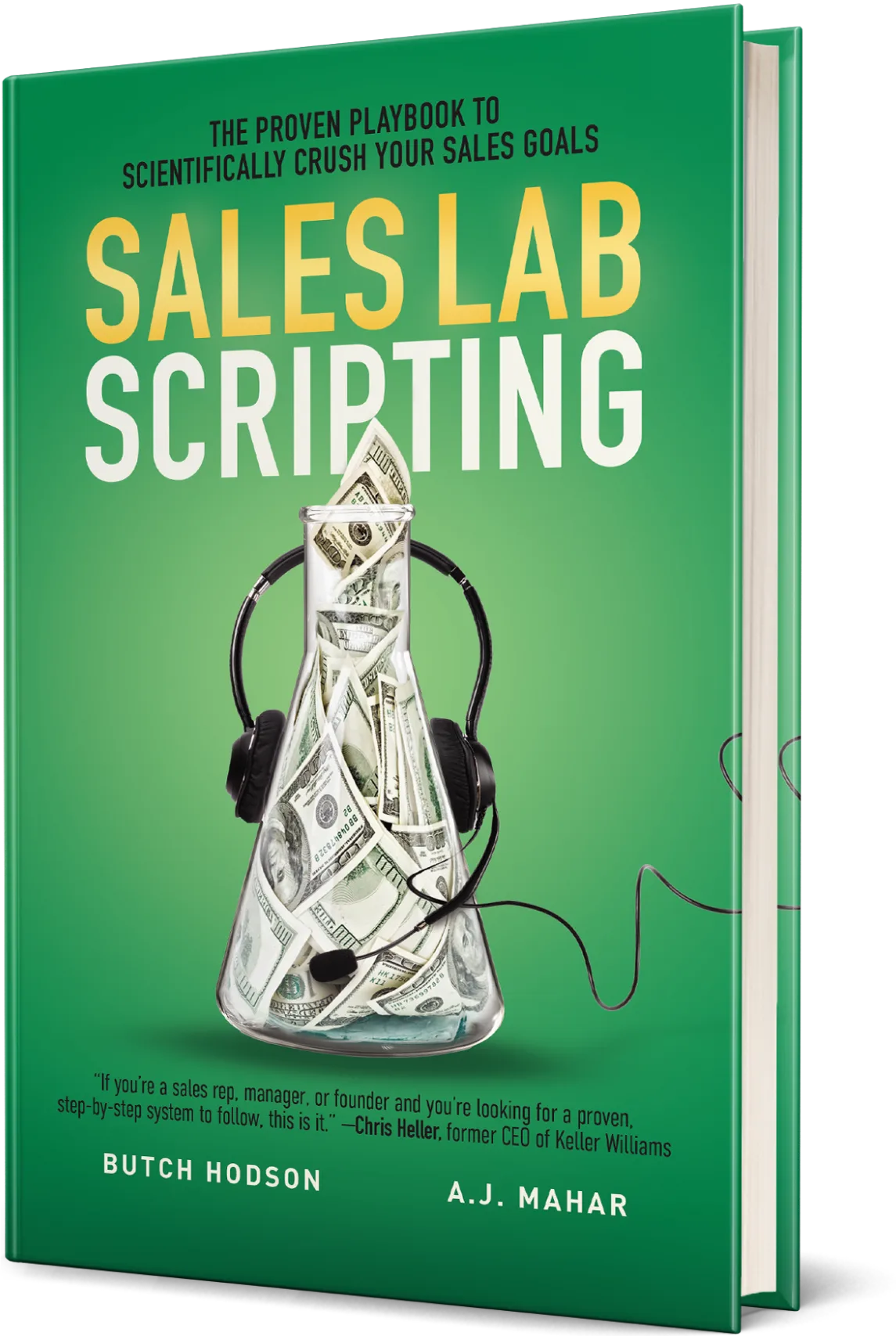
By the way, Butch Hodson and AJ Mahar, authors of Sales Lab Scripting, are hosting a live virtual event on November 6th all about this topic — Building the Right Sales Script. It’s a great opportunity to learn directly from the people who literally wrote the book. REGISTER HERE.
Sellfire is the complete solution for high-velocity sales.
We unlock consistently great revenue performance for companies of all sizes — from founder-led startups to scaled sales organizations.
Learn more at sellfire.com.
Read the full methodology in our pillar guide to Logic-Based Selling.
Frequently Asked Questions