Logic-Based Selling: The Complete Methodology for High-Velocity Outbound

Chief Performance Officer @ Sellfire

Chief Performance Officer @ Sellfire
Most sales advice is generic. It's the same broad themes — "ask better questions," "build rapport," "challenge the customer" — packaged differently and sold to anyone with a sales team. The advice sounds reasonable. The books make great gifts. And almost none of it survives contact with a real outbound floor.
Here's why: a rep selling a 12-month enterprise deal needs an entirely different playbook from a rep trying to book a demo on a cold call this afternoon. A rep doing transactional, high-velocity sales — cycles measured in days or weeks, not quarters — operates under different physics. The conversational dynamics, the objections, the closing math, the very definition of "rapport" all change. Treating those two motions with the same advice is how teams quietly underperform their potential by 5x or 10x without ever knowing why.
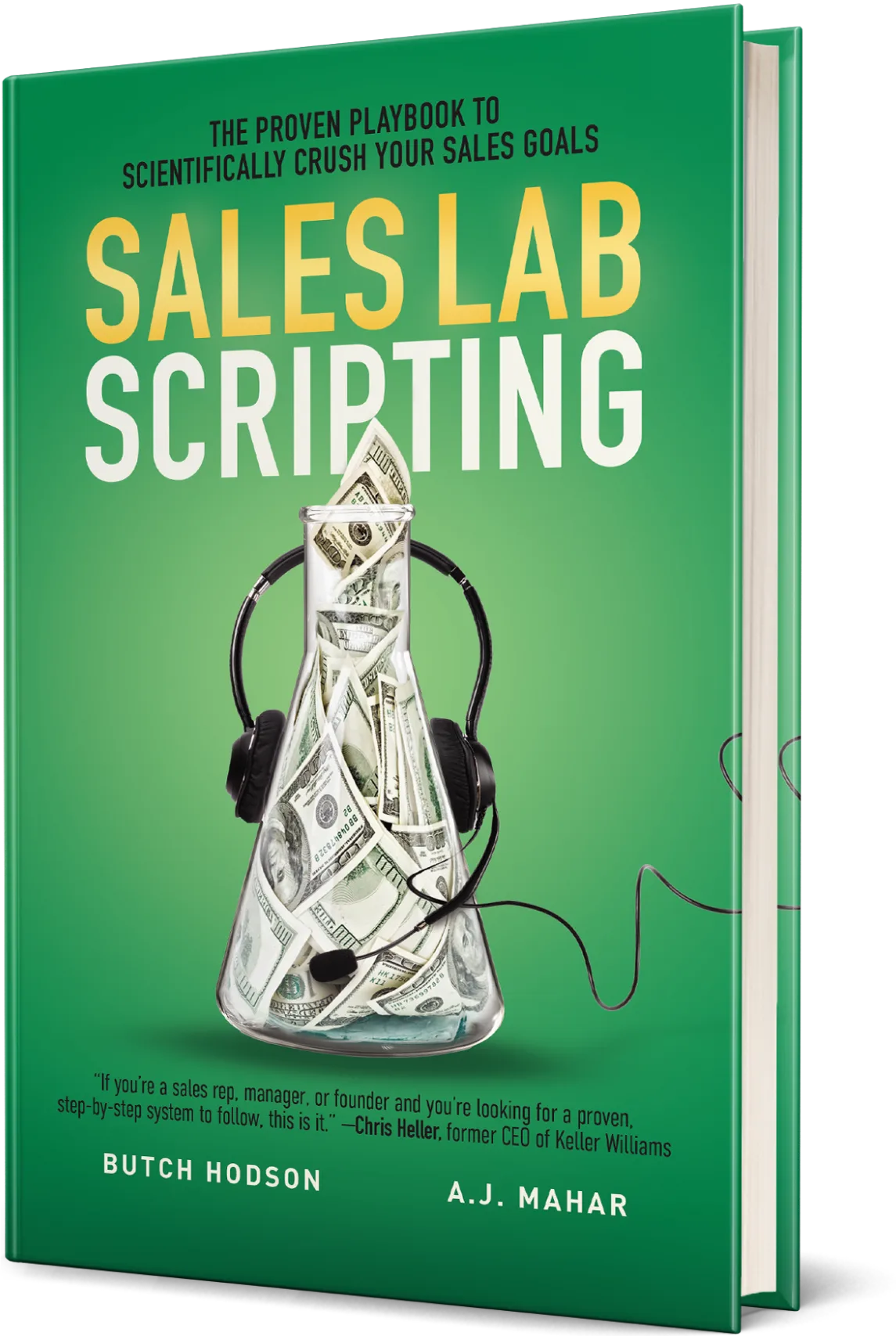
Logic-Based Selling is the methodology we built for high-velocity outbound, refined across more than hundreds of million sales conversations from hundreds of companies. It's the system that took a single rep from booking five sales a month — the industry average — to one hundred and twenty. It's not a theory. It's a system. And the central premise is simple enough to print on a card:
Make your value proposition so logical that disagreement feels irrational.
This guide is the canonical explainer for the methodology. We'll walk through what Logic-Based Selling is, what it isn't, the structure it imposes on your sales process, and the principles that make it work. If you've ever watched a sales floor full of talented reps fail to scale, this is why.
What Logic-Based Selling Actually Is
Logic-Based Selling is the practice of constructing your sales conversation so that every claim, every value proposition, and every closing point is laid out as a series of self-evident logical steps the prospect cannot reasonably refute.
Done well, your selling points stop sounding like selling points. They sound like unrealized common sense. The prospect isn't being persuaded; they're being walked through a calculation they could have done themselves. By the time you reach the close, they're not deciding whether to buy — they're deciding how quickly to move.
The opposite of Logic-Based Selling is what we call emotion-based selling — building rapport, finding common ground, "getting them to like you," manufacturing urgency. That works in some contexts. It does not work in high-velocity outbound. When you have eight minutes on the phone with someone who didn't ask to be there, you don't have time to make them like you. You have time to make them think.
Three characteristics distinguish Logic-Based Selling from every other framework you've read.
First, it's deeply scripted but doesn't sound scripted. Every word is chosen. Every transition is planned. The prospect doesn't notice because the rep has internalized the script the way an actor internalizes lines — not as recitation, but as natural speech under pressure.
Second, it's built around B prospects, not A prospects. We'll get to this in detail below. The short version: most sales training is unintentionally optimized for the easiest 10% of your pipeline, and ignoring the 60% in the middle is what's actually leaving money on the table.
Third, it treats the rep as a professional, not a consultant. Reps don't ask probing discovery questions to "uncover needs." They show up already knowing the prospect's business well enough to demonstrate value in the first 30 seconds. The conversation is led, not negotiated.
If those three points sound contrarian, that's because they are. They cut against most of what's been written about modern sales. They also happen to be how the highest-productivity outbound teams in our industry actually operate.
Why Most Sales Methodologies Fail at High-Velocity
The biggest mistake leaders make when scaling outbound is borrowing a methodology from a different sales motion. Three common failure modes.
The enterprise methodology, misapplied
Most popular sales frameworks — Challenger, MEDDIC, SPIN, Sandler — were developed for long, complex enterprise cycles where deals take six to eighteen months and involve five-plus stakeholders. They emphasize discovery, relationship-building, and multi-thread navigation through buying committees.
In a 30-day cycle with a single decision-maker, that approach is actively counterproductive. The prospect didn't ask for a consultant. They didn't sign up for a discovery process. They picked up the phone, and they want to know within thirty seconds whether you're worth their attention. You either earn the demo in that window, or you don't.
The "rep as consultant" trap
A philosophy has taken hold in sales training that reps should behave like consultants — listening, asking penetrating questions, "uncovering needs," recommending the right solution from a menu. The theory is appealing. The practice is a disaster at scale.
Consultative reps surrender control of the call by default. Open-ended discovery questions create infinite branches the rep then has to handle in the moment, which means the script can't be standardized, which means coaching can't be standardized, which means performance can't be diagnosed when it slips. You've replaced a system with a personality. And personalities don't scale.
There's a customer-side problem too: who wants to be asked fifteen questions by a consultant they didn't hire for a problem they don't believe they have? Prospects on cold calls don't want to be interviewed. They want to be respected for their time and shown immediate value. The consultative posture, applied to outbound, gets you politely told to send something over by email.
The "rep as personality" trap
The third failure mode is the assumption that sales success comes from charisma. Hire enough A-players, let them sell however they sell, get out of the way. This works at five reps. It catastrophically fails at fifty.
When every rep has their own pitch, managers can't coach effectively. There's no baseline for what "good" sounds like, no way to identify which step in the funnel is broken, no way to onboard new reps without throwing them at a senior rep and praying. The team's entire performance is captive to the personalities of a small number of intuitive sellers — and the moment one of them leaves, you take a quarter to recover.
Logic-Based Selling solves all three problems by replacing methodology imported from the wrong category with one designed specifically for the category you're actually in.
The Core Premise: Hard to Refute a Fact
The single most important sentence in our methodology is this:
It's hard to refute a fact.
Every part of a Logic-Based Selling script — the cold call, the demo, the close — is designed around presenting facts the prospect cannot reasonably argue with. Not opinions. Not features. Not benefits. Facts, in language the prospect can verify against their own experience.
When you tell a prospect, "Our software is great," you're presenting an opinion, and they're entitled to disagree. When you say, "Companies that adopt our system see their reps make 3x more dials in the first 30 days because the platform removes the manual lookup work between calls" — that's a fact. They can argue with the magnitude, but they can't argue with the mechanism. And once they agree the mechanism is real, the conversation has moved.
Done well, a Logic-Based Selling demo is a sequence of these moves. Each one earns a small agreement. Each agreement constrains the prospect's ability to refuse the next one. By the time the rep gets to pricing, the prospect has already agreed to ten or fifteen propositions that, taken together, make buying the obvious next step. They aren't being closed. They're closing themselves.
This is also why the methodology works without high-pressure tactics. There's no need to manufacture urgency or guilt-trip a prospect into a yes. The logic is the leverage. If the math is sound and the value is real, the only thing left to do is start.
The Two-Call Structure
Logic-Based Selling imposes a specific structure on the sales process: two calls, with sharply distinct goals.
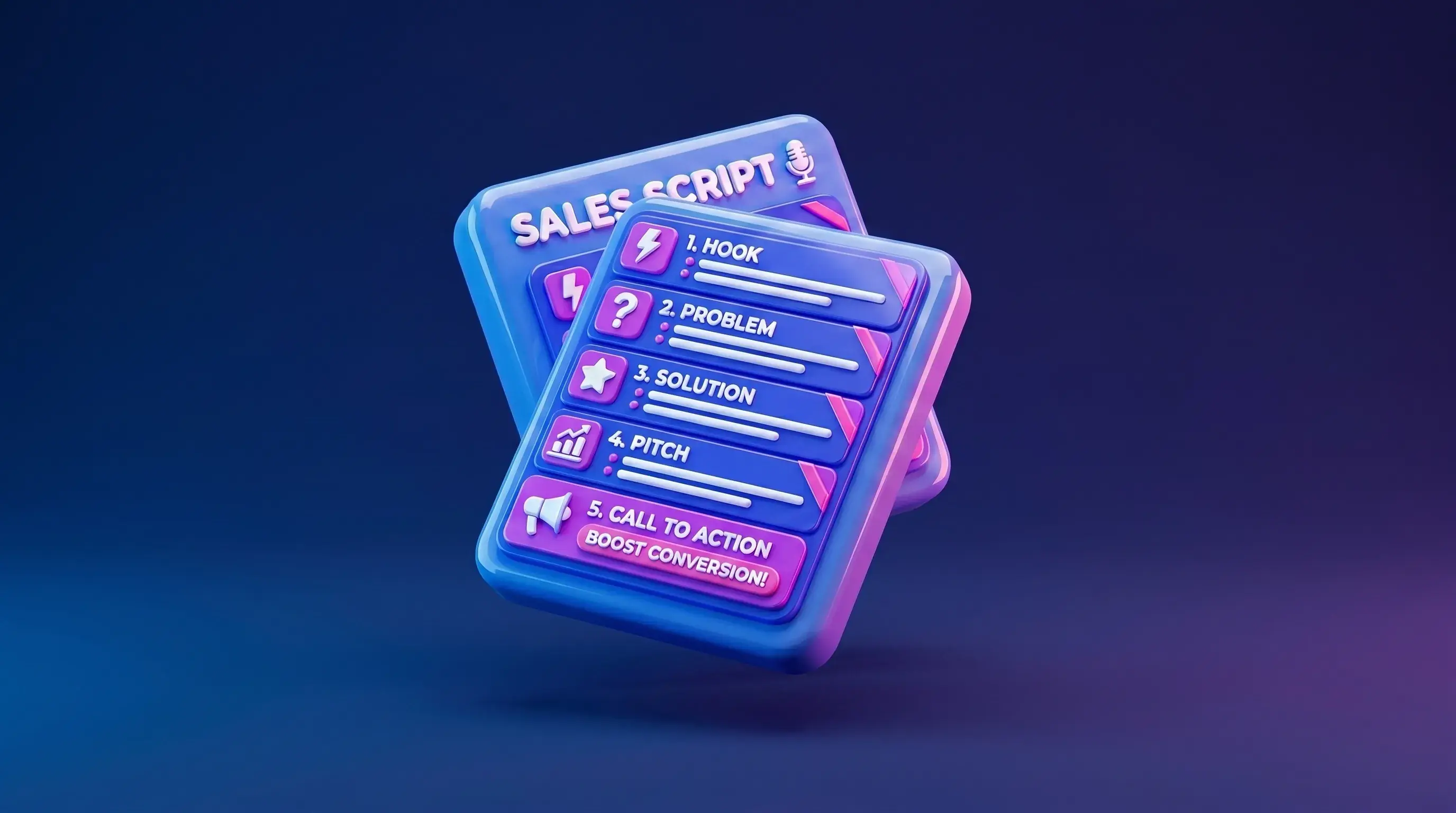
Call 1 — the cold call — has one job: set the demo. It is not the place to sell the product. Reps who try to pitch the full product on a cold call lose, because there isn't time to build the logical chain that makes the close inevitable. They bury the prospect in features, the prospect can't process it, and the call ends with "send me something over." A great Call 1 is short — usually under three minutes — and ends with a calendar invite for Call 2.
Call 2 — the demo — has one job: close the sale. It runs 30 to 45 minutes, follows a fixed eight-section structure (cover page, agenda, credibility, walkthrough, timeline, trial close, pricing, transition to close), and is where the actual logical chain is built. By the time the rep reaches pricing, the prospect has already agreed to enough propositions that pricing is a formality, not a negotiation.
The reason for this split is mechanical. A 30-second cold-call pitch can convey enough value to earn a demo, but not enough to close a sale. A 30-minute demo can close a sale, but you can't run one with someone who hasn't agreed to be there. Two calls, two jobs. One conversation collapses both into a confused middle and underperforms both.
This structure also dramatically improves coaching. With two distinct calls and clear goals, performance can be diagnosed precisely. If demo set rates are low, the problem is Call 1. If demo show rates are low, the problem is the calendar handoff. If close rates are low, the problem is one of the eight Call 2 sections. Every drop-off has an address.
Who You're Actually Selling To: The A, B, and F Framework
One of the most distinctive elements of the methodology is how we classify prospects. Most sales training treats prospects as a uniform population — "leads" — and applies the same script to all of them. We don't.
There are three types of prospects, and they require three different approaches.
A Prospects are lay-downs. They're already sold, in the market, and ready to buy from someone. They'd buy from a competitor with a worse pitch. They make great month-end stories but they're not where the methodology pays off — the script almost doesn't matter for them.
F Prospects are hostile. They're rude, defensive, sometimes outright abusive. They will fight every step of the conversation. Some reps view F prospects as a challenge to win over. They are not. They are a tax on your sales floor's morale, your customer service team's time, and your refund rate. Even if you close one, they'll churn in 60 days and leave a bad review on the way out. Recognize them quickly. Disengage politely. Dial the next number.
B Prospects are the meaningful middle — six or seven out of every ten on your list. They'll listen. They'll let you pitch. They'll set the demo. And then, at the very end, they'll have a reasonable objection: they need to think about it, talk to a partner, look at competitors. This is who your script is for. This is where the ROI of better methodology actually lives.
The reason this framework matters: when you build a script for B prospects, you build a script that turns reasonable hesitation into "this makes too much sense; let's do it." When you build a script for A prospects, you build a script that closes only the people who would have closed anyway. The difference is the entire economic gap between a 5-rep sales team and a 50-rep sales team.
How a Logic-Based Script Actually Works
A Logic-Based Selling script does four things simultaneously: it controls the conversation, anticipates objections, builds value before price, and uses tonality as a separate channel of meaning.
Control through structure
The rep is always one step ahead. Every probable response from the prospect — agreement, disagreement, deflection, objection — has a planned next line. There's no improvisation, because improvisation is how reps lose the thread. Reps internalize the entire decision tree, which is why training in this methodology is intensive: you're not memorizing twenty lines, you're internalizing a system.
Anticipating objections before they're raised
We use a technique called Confidence-Building Statements (CBSs) — short phrases dropped throughout the call that defuse common objections before the prospect raises them. ("A lot of folks ask whether this is going to be a long, complicated setup. It's not — most of our clients are live in 14 days.") Said early, they keep the objection out of the prospect's mouth. Said late, they're rebuttals. Either way, they shape the conversation.
Tonality as a parallel channel
A Logic-Based script doesn't just specify the words. It specifies the tonality — the inflection, pace, and emphasis. Saying "just tell him it's A.J." in a casual familiar tone is a perfectly normal interaction. Saying it in a flat or demanding tone sounds like a threat. Same words, different outcome. Reps are trained on tonality with as much rigor as they're trained on words.
ROI as the closing math
When it's time to talk price, we don't lead with the number. We lead with the return. Specifically, we use a conservative ROI calculation — always pegging our estimate lower than the prospect's own — and let the prospect mentally do the more aggressive math themselves. If the prospect says they close 8 of 10 demos, we calculate ROI assuming 4 of 10. If their own number is right, they're getting twice what we promised. They know it. We never said it. Credibility intact, expectations beaten.
Why Standardization Beats Personality at Scale
The single biggest unlock from Logic-Based Selling is what happens to coaching when every rep is on the same script.
Without a standard, every rep's call is a unique artifact. A manager listening in has no baseline, no frame of reference, no way to know whether the rep is one line away from a great call or one line away from blowing up the deal. Coaching becomes guesswork. The manager who's good at coaching does it well; the one who isn't, doesn't, and there's no way to tell which is which until the team's numbers tell you it's already too late.
With a standard, every call is measurable against a known structure. Did the rep deliver the 30-second pitch in the right order? Did they hit the credibility section before the walkthrough? Did they ask the head-to-head question before transitioning to price? Coaching becomes a science, not an art. Performance issues have specific addresses. New reps ramp predictably. Top reps create reusable improvements that lift the whole floor.
This is the part most teams miss when they evaluate scripting. They worry that a script will make their reps sound robotic. The actual experience is the opposite: reps on a tight script sound more natural, because they're not improvising under pressure — they're delivering material they know cold. The script is a runway, not a cage.
We've also seen what happens when teams try to write scripts the wrong way: they gather their top reps and managers in a room and try to crowdsource a great script through collaboration. What you get back is a Frankenstein — every contributor's view stitched together, nobody's whole vision intact. Even the people who wrote it don't fully believe in it, which means rollout fails before it begins.
The right way is data-driven: find your one outlier rep with a replicable approach (not just outlier numbers — replicable behavior), document what they're doing on every call, and refine that into the standard. If you don't have an outlier yet, hire a script-writer to develop one against the principles in the methodology and refine through testing. Either way, the script is built from evidence, not opinion.
Is Logic-Based Selling Right for Your Team?
Logic-Based Selling is purpose-built for one specific shape of sales motion. It works extraordinarily well inside that shape and poorly outside it. The shape:
Sales cycles measured in days or weeks, not quarters — anything under 90 days is squarely in scope. Phone- or video-based motion, not field. The methodology depends on tonality, pace, and structure that field sales doesn't replicate. A repeatable product with a defined ICP — custom enterprise deals are a different game. A team of five or more reps, or a plan to scale there. Below five, methodology gains are real but smaller; above five, the standardization compounds quickly.
If that's your motion, Logic-Based Selling is one of the highest-leverage operational changes you can make. We've watched teams move from booking 4 demos per SDR per week to 12+, with close rates improving in lockstep. The math compounds: more demos, better close rates, better unit economics, more SDRs you can profitably hire.
If your motion looks fundamentally different — six-figure ACVs, year-long cycles, in-person sales — much of what's in this methodology will not apply directly. Some pieces (the discipline of standardization, the ROI math, the focus on B prospects) translate. The two-call structure does not.
Frequently Asked Questions