Break the Cycle: Are You Targeting the Right People at the Right Time?

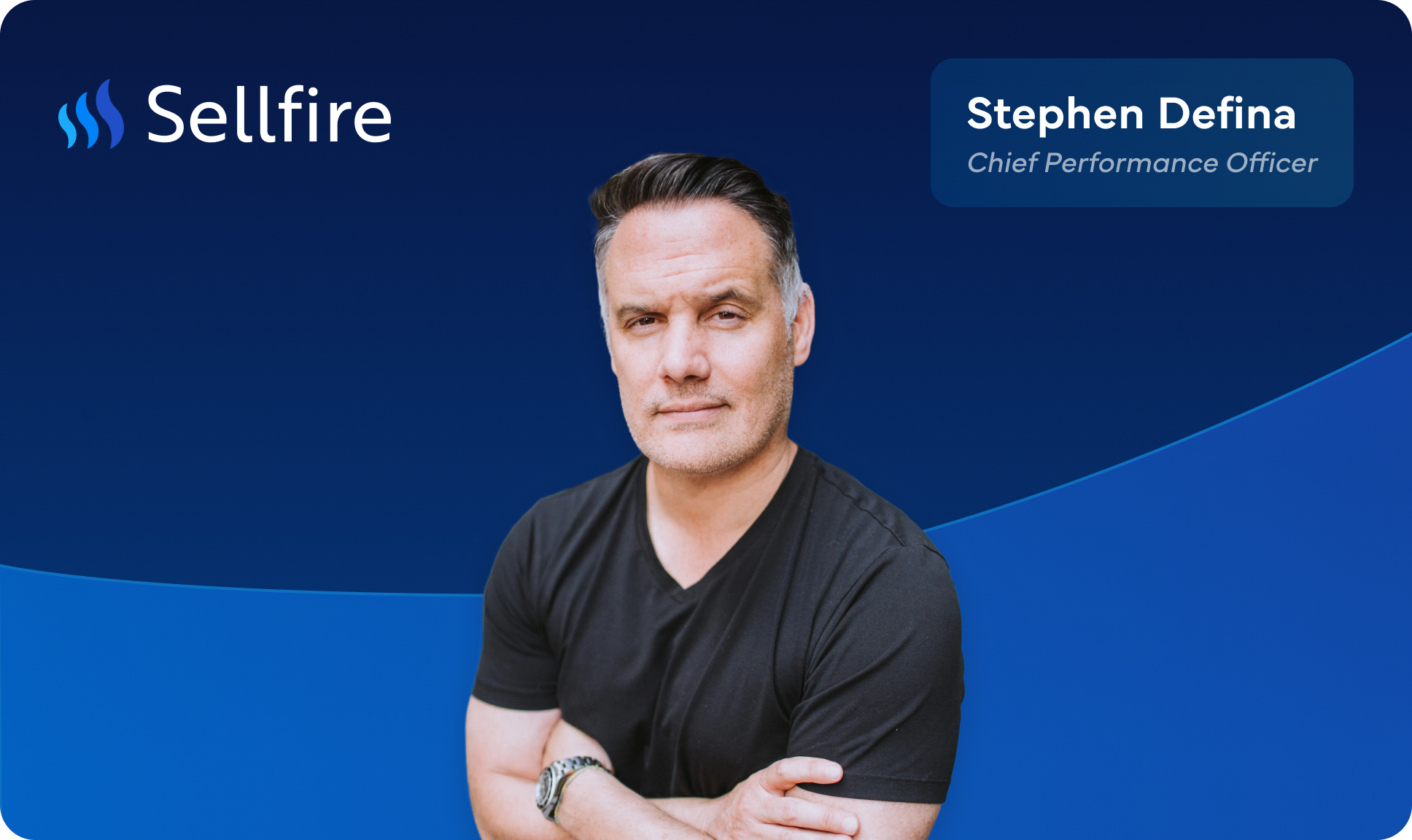
Chief Performance Officer @ Sellfire
Chief Performance Officer @ Sellfire
Most sales teams waste time chasing the wrong leads. If you're unsure whether you're reaching the right businesses, the right decision-makers, at the right stage of their buying journey, your outreach is likely missing the mark.
And when that happens, it doesn't just impact your close rate. It eats into your team's time, energy, and confidence. Sales cycles drag on. Pipelines stall. Frustration builds. And before long, your top performers start questioning whether the problem is them, when in reality, the system is failing them.
The Myth of "More"
For years, companies have pushed the idea that success in sales is about more: more calls, more emails, more touches. But smart leaders know that strategic targeting isn't a numbers game. It's a thinking game.
Volume without precision is just noise. What you need is intelligent outreach: the right message, to the right people, at exactly the right time.
We're Focusing on What Needs to Be Done Next
Why does that matter?
Because every successful sales motion begins with focus and that means answering three non-negotiable questions about your outreach:
Am I calling the right business? Do they actually need your product, and can they afford it? If the answer to either is "no," you're spinning your wheels, you're burning valuable time wasting precious resources.
Am I reaching out to the right person? Are they in a position to buy or, at minimum, champion your solution internally? Job titles and org charts matter, but so does influence. Aim for access, not just authority.
Am I reaching out at the right time? Timing is a strategic edge. Are you contacting prospects when they're most likely to respond? Time of day, day of the week, even seasonality can all impact connect rates.
If you can't confidently answer yes to all three, your outreach isn't optimized. And that inefficiency compounds across your entire team, dragging down pipeline velocity and ROI.
Smarter Targeting Starts With Smarter Data
Forward-thinking sales leaders don't leave targeting to guesswork. They leverage tools and processes that identify:
Ideal Customer Profiles (ICP): built on behavior, fit, and readiness
Real-time buying intent: who's actively researching your category right now?
Decision-maker mapping: who has influence, who has authority, and who's standing in your way?
This is where precision beats brute force. And it's where sales teams start seeing real traction.
The Hidden Efficiency Killer: Tech Stack Chaos
But here's where most teams hit another wall even when they've nailed their targeting and messaging.
Picture this: You've identified the perfect ICP. Your message is dialed in. Your timing is spot-on. But to actually execute that outreach, your rep has to log into five different systems: CRM, email sequencing tool, social selling platform, call dialer, and research database. By the time they've navigated between platforms, updated records, and pieced together the prospect's journey, that "perfect timing" window has closed.
If you have the right leads and the right message but you have to log into 5 systems to make contact with an ICP, is that efficient learning?
The answer is no. And it gets worse.
When your sales process is scattered across multiple tools, you lose something even more valuable than time: data attribution. Your reps might be landing demos, but because touchpoint data lives in silos across your tech stack, you can't identify what's actually working.
If you are using a process that is landing you demos but because you have 5 tools in your stack you do not have good data attribution, will you be set up to repeat your wins? Can others learn from your success?
Again, the answer is no.
Without clear attribution, your best practices die with your top performers. New hires can't learn from proven playbooks. Managers can't coach what's actually driving results. And your entire team is left guessing at what moves the needle, even when they're hitting their numbers.
This is how good targeting gets sabotaged by operational chaos. And it's why tool consolidation isn't only about convenience it's about competitive advantage.
From Guesswork to Growth
At Sellfire, we help leaders go beyond vague ICP definitions and build targeting strategies and reliable sales scripting that aligns with actual buyer behavior, market fit, and sales capacity. Because growth is about doing it smarter.
Here's what high-performance teams do differently:
Clarify the ICP with data, not assumptions
Use signal-based prospecting, not just static lists
Align marketing and sales outreach to buyer stages
Time outreach based on when prospects are most likely to engage
Targeting and Unlocking
Fixing targeting as a strategic unlock. When your team stops chasing noise and starts focusing on high-fit, high-readiness prospects, everything changes:
More connects
Shorter sales cycles
Higher conversion rates
Reps that are actually energized to sell
Because when you stop trying to do it all, you finally start doing what matters.
Ready to Break the Cycle?
This is just the beginning. There are deeper dysfunctions hiding in your system and smarter ways to outmaneuver all of them.
Next up: Can Your Message Win Without You in the Room?
In the meantime, if you're ready to start building a sales system that works for your team, not against it, reach out to Sellfire. Let's fix the foundation together.
Part of our Break the Cycle series on fixing broken sales systems.
Frequently Asked Questions